A Homeowners Guide to Gas Boilers
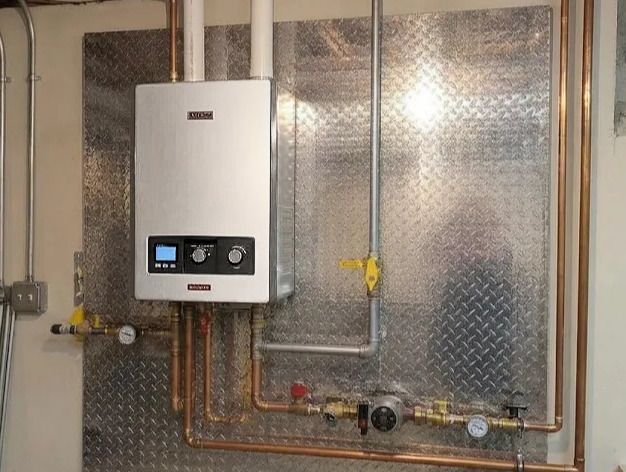
Gas Boilers in Durham Region: How They Work, Who They Suit, and What Maintenance They Need
Boiler-heated homes are a familiar sight across many established neighbourhoods in Durham Region, from century homes in downtown Whitby and historic properties in central Oshawa to older residential pockets of Bowmanville. Alongside custom-built modern homes equipped with in-floor heating, thousands of local properties rely on hydronic systems rather than traditional ductwork to get through Ontario winters.
If you recently moved into a boiler-heated house or are managing an aging unit, you likely have questions about how your system compares to a standard furnace, what happens inside the mechanical room, and how to keep it running safely. While our Boilers & Tankless service page outlines our installation and repair capabilities, this homeowner's guide covers the everyday mechanics of a gas boiler in Durham Region; how hydronic heat works, which homes benefit most, and what a thorough annual tune-up actually involves.
How a Gas Boiler Heats Your Home
Unlike a forced-air furnace that heats air and pushes it through sheet-metal ducts using a blower motor, a residential gas boiler is a hydronic heating system; meaning it uses heated water to warm your living spaces.
Despite the name, modern residential hot water boilers do not actually boil water into steam (though a few very old steam boilers still exist in historic Ontario homes). Instead, the process follows a sealed, continuous loop:
- Thermostat Call: When your room temperature drops below your setting, the thermostat signals the boiler control board and opens the corresponding zone valve.
- Ignition and Heating: The natural gas burner ignites inside the combustion chamber, transferring thermal energy through a metal heat exchanger into the water surrounding it (typically heating the water to between 140°F and 180°F, or lower for radiant floors).
- Circulation: An electric circulator pump pushes the heated water through a network of insulated copper or PEX piping throughout your home.
- Heat Delivery: The hot water flows through cast-iron radiators, baseboard fin-tube convectors, or underfloor tubing, radiating warmth into the room without blowing air.
- The Return Loop: As the water gives up its heat, the cooler water travels back to the boiler through a return pipe to be reheated, repeating the cycle until the thermostat is satisfied.
Because water is an exceptionally dense thermal medium; capable of holding roughly 3,500 times more heat per cubic foot than air; hydronic systems deliver steady, lingering warmth long after the burner cycles off.
Boilers vs. Forced-Air Furnaces: Which Is Better?
Homeowners often ask whether a boiler is "better" than a forced-air furnace. In practice, neither system is universally superior; each offers distinct trade-offs in comfort, indoor air quality, and upfront cost.
- Heat Consistency and Comfort: Forced-air systems heat a room quickly, but the air cools rapidly once the blower stops, sometimes creating noticeable temperature swings or cold drafts. Hydronic boilers heat the physical surfaces and objects in a room, delivering quiet, gentle, and remarkably even warmth from floor to ceiling.
- Indoor Air Quality and Allergies: Because forced-air furnaces constantly recirculate household air through ductwork, they can stir up dust, pet dander, and seasonal allergens if filters aren't changed diligently. Boilers use zero air movement, making them a preferred choice for homeowners with asthma, severe allergies, or sensitivity to dry winter air.
- Multi-Zone Control: While zoning a forced-air system requires complex motorized dampers inside the ductwork, boilers are naturally suited to zoning. Using individual circulator pumps or motorized zone valves, you can set different temperatures for the basement, main floor, and upstairs bedrooms with minimal energy waste.
- Cooling Integration: This is the biggest limitation of a boiler. Because a furnace already uses a blower and ductwork, adding central air conditioning is straightforward. A boiler-heated home has no ducts, meaning homeowners who want summer cooling typically pair their boiler with ductless mini-split heat pumps or high-velocity air handlers.
- Installation Cost and Lifespan: Boilers require intricate copper or PEX manifold piping, circulator pumps, and valves, making them more expensive and labour-intensive to install than a standard furnace. However, with fewer high-speed moving parts, a well-maintained boiler often lasts 15 to 25+ years, compared to the typical 15-to-20-year lifespan of a forced-air furnace.
Homes That Are Well Suited to Boiler Systems
While converting a ducted suburban home to a boiler is rarely cost-effective due to the drywall and flooring work required to run pipes, hydronic systems are the ideal solution for several types of properties related to radiant heating in Ontario:
- Older Homes in Whitby, Oshawa, and Bowmanville: Properties built with plaster walls, brick interiors, or tight framing that already house cast-iron radiators or hydronic baseboards should almost always retain their hydronic setup. Retrofitting bulky ductwork into a century home sacrifices closet space, ceiling height, and architectural character.
- Custom Homes and Basement Renovations with In-Floor Heating: Homeowners finishing a basement, building an addition over a garage, or constructing a custom home frequently choose PEX tubing embedded in concrete slabs or under subfloors. Stepping onto warm tile or hardwood in January is one of the highest-comfort upgrades available.
- Multi-Level or Sprawling Layouts: Homes with large footprints, sunrooms, or separate in-law suites benefit from hydronic zoning, allowing rarely used spaces to be kept cooler without starving the rest of the house of heat.
- Space-Constrained Mechanical Rooms: Modern wall-hung boilers take up a fraction of the floor space of a traditional furnace and ductwork plenum, freeing up valuable square footage in smaller utility rooms.
Types of Boilers: Conventional vs. Condensing
If your current boiler was installed 20 or 30 years ago, it operates very differently from the high-efficiency systems installed today. Understanding the difference between conventional and condensing boilers is key when planning an upgrade.
Conventional (Non-Condensing) Boilers Older cast-iron boilers typically operate at 80% to 84% AFUE (Annual Fuel Utilization Efficiency). That means 80 to 84 cents of every dollar spent on natural gas goes toward heating your home, while the remaining 16% to 20% escapes up a metal chimney or B-vent as hot exhaust gas. Conventional boilers must maintain high return-water temperatures (usually above 130°F–140°F) to prevent acidic flue gases from condensing inside the heat exchanger and corroding the cast iron.
High-Efficiency Condensing Boilers Modern condensing boilers are equipped with stainless steel or specialized aluminum heat exchangers and are specifically engineered to capture that escaping exhaust heat. By cooling the exhaust gases below their dew point (around 130°F), the boiler causes water vapour in the flue gas to condense back into liquid, extracting latent heat before venting the cooled exhaust outdoors through simple PVC or polypropylene plastic piping.
As a result, modern condensing boilers achieve efficiencies above 90% AFUE (often reaching 95% to 96% AFUE). Many also feature modulating burners with high turndown ratios. Instead of firing at 100% capacity every time the thermostat calls for heat, a modulating boiler automatically scales its flame up or down (for example, running at 20% capacity on a mild November afternoon and 90% during a January cold snap), maximizing fuel savings and component longevity.
Annual Boiler Maintenance: What Should Be Checked
Because a boiler manages pressurized hot water alongside natural gas combustion, annual preventative maintenance is essential for both safety and efficiency. Booking routine boiler maintenance in Oshawa, Whitby, or anywhere in Durham Region before the peak winter freeze ensures your system won't fail on the coldest night of the year.
During a comprehensive annual tune-up, a licensed gas technician inspects and tests several critical components:
- Pressure Relief Valve Testing: The temperature and pressure (T&P) relief valve is your boiler's primary safety device. If system pressure exceeds safe limits (typically 30 PSI on residential units), this valve opens to release water and prevent catastrophic tank or pipe failure. Technicians inspect it for mineral corrosion, weeping, and proper mechanical operation.
- Expansion Tank Inspection: As water heats up, it expands. The expansion tank uses an internal pressurized air bladder or diaphragm to absorb that extra water volume and keep system pressure stable (usually between 12 and 15 PSI when cold). If the bladder fails and the tank becomes waterlogged, pressure will spike every time the boiler fires.
- Circulator Pump and Zone Valve Checks: Technicians check the circulator pump for abnormal bearing noise, amp draw, and proper water flow, while ensuring motorized zone valves open and close smoothly when thermostats call for heat.
- Bleeding Radiators and Air Elimination: Trapped air bubbles in a hydronic loop block hot water from reaching the tops of radiators and cause loud gurgling or sloshing noises in the pipes. Bleeding radiators and inspecting automatic air vents restores full heating capacity across every room.
- Heat Exchanger and Condensate Trap Cleaning: On high-efficiency condensing boilers, acidic condensate drains through a trap and neutralizer before entering your floor drain. If this trap clogs with combustion sediment, the boiler's safety switches will lock out the burner.
- Combustion Analysis: Using a digital flue gas analyzer, the technician measures carbon monoxide (CO), oxygen (O2), carbon dioxide (CO2), and stack temperatures to verify the gas-to-air mixture is burning cleanly, safely, and at peak AFUE rating.
Common Boiler Problems and What They Indicate
Boilers rarely fail without giving subtle warning signs first. Recognizing what specific symptoms indicate can help you catch minor repairs before they damage expensive components like the heat exchanger or circulator pump.
- Low or Fluctuating System Pressure: Watch the pressure/temperature gauge on your boiler. A healthy residential system typically sits at 12 to 15 PSI when cold and rises slightly to around 18 to 20 PSI when hot. If pressure drops below 10 PSI, there may be a slow leak in a radiator valve, relief pipe, or automatic feed valve. If pressure climbs toward 30 PSI and causes the relief valve to drip water onto the floor, the expansion tank has likely failed or the fill valve is stuck open.
- Zone Valve Failures: If your main floor is warm but the upstairs bedrooms are freezing (or vice versa), a motorized zone valve head has likely burned out or become stuck. Conversely, if one zone continues overheating even when the thermostat is turned down, the zone valve may be stuck in the open position, allowing hot water to "ghost flow" whenever another zone calls for heat.
- Kettling Sounds (Rumbling, Banging, or Whistling): If your boiler sounds like a whistling tea kettle or makes loud rumbling bangs when the burner fires, it is experiencing kettling. In Durham Region, where municipal and well water can be moderately to very hard, calcium and magnesium minerals precipitate out of the water and bake onto the inside of the heat exchanger. This lime scale acts as an insulator, trapping water against the hot metal until it flash-boils into steam bubbles that violently collapse. Flushing the system and treating the water helps prevent heat exchanger cracks.
- Pilot Light, Flame Sensor, or Ignition Lockouts: Older standing-pilot boilers may suffer from a worn thermocouple that shuts off the gas valve. Modern electronic-ignition boilers use spark igniters and flame rectification rods; if the flame sensor becomes coated in carbon buildup or oxidation, the control board won't detect the flame and will shut the burner down after a few seconds, flashing an error code on the display.
When to Repair vs. Replace a Boiler
Deciding whether to invest in another repair or upgrade to a new high-efficiency condensing system comes down to safety, equipment age, and long-term operating costs.
Repair is usually the right call when:
- The boiler is under 15 years old and has a solid maintenance history.
- The issue is isolated to an external, replaceable wear part—such as a circulator pump, zone valve, expansion tank, pressure relief valve, or igniter.
- The heat exchanger is completely intact with no signs of rust-through or water seepage.
Replacement is the smarter investment when:
- The heat exchanger is cracked or leaking: If water is pooling directly underneath the boiler jacket from an internal heat exchanger leak, or if a combustion test reveals unsafe carbon monoxide levels, the unit must be replaced immediately.
- Your conventional boiler is 20+ years old: Moving from an aging 80% AFUE cast-iron boiler to a 95% AFUE modulating-condensing boiler can significantly lower your winter Enbridge gas bills while freeing up mechanical room space.
- Repair costs are stacking up: If a single repair exceeds 30% to 50% of the cost of a new unit, or if you are calling for emergency service every winter, putting that money toward a warrantied replacement offers far better return on investment. For a deeper breakdown of how age, efficiency rebates, and repair math factor into your decision, read our guide: Is It Time to Upgrade? Repair vs. Replace in 2026.
Trusted Boiler Service in Whitby, Oshawa & Durham Region
Because hydronic heating combines gas combustion, electrical zoning controls, and pressurized water plumbing, not every HVAC contractor works on boilers regularly. Whether you need an autumn safety inspection and combustion analysis, fast diagnostics for a cold radiator zone, or an honest quote on a high-efficiency condensing boiler replacement, the licensed technicians at Walchuk Heating & Cooling have the training and diagnostic tools to keep your system running reliably.
Have questions about your home's radiant heating or ready to book your annual tune-up? Explore our Boilers & Tankless service page or Request Service today to schedule an appointment with our team.