Is your furnace ready for Winter?
As the leaves turn and the air grows crisp in Whitby, Oshawa, Ajax, and across the Durham Region, our thoughts naturally turn to staying warm. While Ontario winters can be beautiful, they are unforgiving if your heating system isn't prepared.
At Walchuk Heating & Cooling, we know that the vast majority of furnace failures occur during the very first significant cold snap of the season. After sitting dormant all summer, the system is suddenly asked to run at full capacity, and if there’s an underlying issue, that’s when it will show itself.
This spike in demand creates a backlog for emergency HVAC services across the region. The best way to avoid being left in the cold (and paying premium rates for a weekend or after-hours repair) is proactive preparation.
Is your furnace ready for the months ahead? Here is your readiness and safety checklist.
Why October Is the Best Month for a Furnace Check
October is the sweet spot for HVAC maintenance in Ontario. It’s typically cool enough that you’ll want some heat, but not yet freezing. This timing offers several advantages:
- Technician Availability: Scheduling an inspection now is easier than waiting until November or December when demand peaks.
- Peak Efficiency: A clean, inspected furnace runs more efficiently, saving you money on gas bills right from the start of the season.
- Peace of Mind: Knowing your system is safe and ready allows you to relax as the temperatures drop.
Learn more about our comprehensive approach to service on our Furnace & A/C Service Page.
Warning Signs That Your Furnace Needs Attention
Before you commit to a full service, you can perform a quick DIY assessment. Keep an eye (and nose) out for these common red flags. If you notice any of the following, it’s time to call a licensed technician:
- Unusual Odours: A brief burning smell is common when a furnace first kicks on after a long summer (it’s just burning off dust). However, a persistent burning smell, or any hint of sulphur (rotten eggs), should be investigated immediately. The sulphur smell may indicate a gas leak.
- A Yellow or Orange Pilot Flame: The pilot flame should be crisp blue with a hint of yellow at the very tip. A flame that is predominantly yellow or orange indicates incomplete combustion, which can produce dangerous carbon monoxide.
- Unusual Sounds: Banging, squealing, rattling, or grinding noises suggest mechanical issues. A failing blower motor or a loose belt often makes itself heard before the unit quits entirely.
- Uneven Heating: If some rooms in your home are too hot while others are freezing, your furnace may be struggling to distribute air effectively, or you may have ductwork issues.
- Rising Gas Bills: An unexpected and unexplained spike in your utility bills often means your furnace is working much harder than it should to maintain the set temperature.
If you are experiencing any of these issues, you may find answers in our Common Furnace Repair Questions and Answers.
What a Professional Furnace Inspection Covers
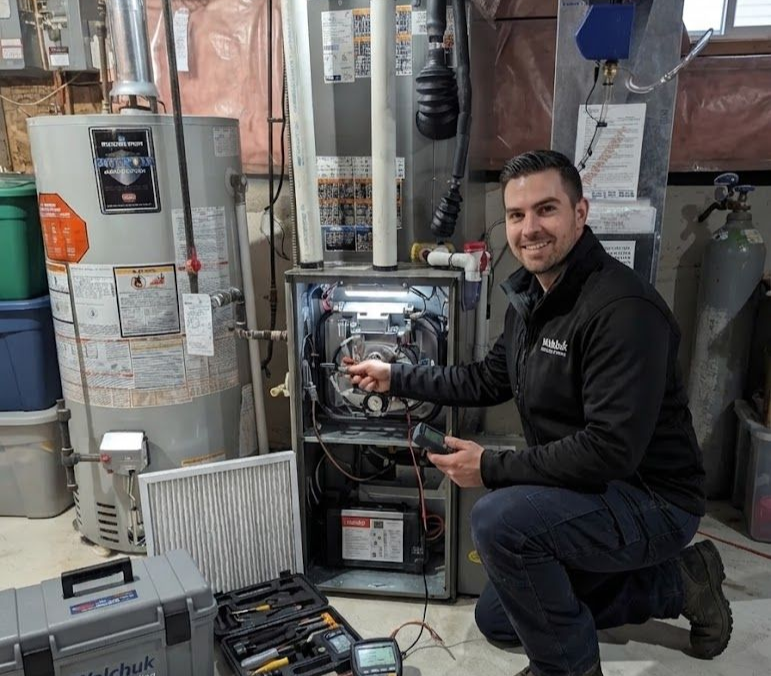
While DIY checks are useful, a professional inspection by a licensed TSSA (Technical Standards and Safety Authority) technician in Ontario is essential for safety and efficiency. Here is what a standard tune-up involves:
- Heat Exchanger Integrity: This is the most critical safety check. The heat exchanger separates the combustion gases from the air you breathe.
- Burner Operation and Combustion Analysis: The technician will clean and adjust the burners to ensure clean burning, which maximizes efficiency and minimizes CO production.
- Gas Valve and Pressure: Verifying the gas pressure is correct ensures the unit is receiving the proper amount of fuel.
- Igniter Function: Testing the hot surface igniter (or pilot light) ensures reliable startups.
- Flue Draft: Ensuring proper venting prevents combustion gases from backing up into your home.
- Filter Condition: We will inspect your air filter and replace it if necessary. For more on why this matters, see our post on Furnace Filters Explained: MERV Ratings, Sizes, and Why Bigger is Better.
The Heat Exchanger: Why It Matters for Safety
Your furnace burns natural gas, a process that creates harmful byproducts, including carbon monoxide (CO). The heat exchanger is a metal "clamshell" that contains these hot gases while the blower fan pushes air over the outside of the shell to heat your home.
Over years of heating and cooling, the metal expands and contracts, which can eventually lead to cracks or rust holes in the heat exchanger. If this happens, dangerous CO can mix with the air being circulated through your duct system. A cracked heat exchanger is a serious hazard that necessitates immediate furnace replacement.
This is why professional inspections are non-negotiable. A visual inspection requires specialized tools (like a borescope) and expertise.
Carbon Monoxide: What Every Homeowner Should Know
Because the risk of CO poisoning exists wherever fossil fuels are burned, Ontario regulations are strict. You must have working carbon monoxide detectors installed on every level of your home and within five metres (16 feet) of each sleeping area.
Don't just rely on the detector, though. The professional combustion analysis mentioned above ensures your furnace isn't producing excessive CO in the first place. Test your detectors monthly to ensure they are operational.
How Old Is Too Old? When to Consider Replacing a Furnace
Like any appliance, furnaces have a finite lifespan. In Ontario, a well-maintained furnace typically lasts between 15 and 20 years.
If your furnace is approaching or has passed that 15-year mark, it is operating on borrowed time. Even if it seems to be working, it is likely much less efficient than modern units. Furthermore, as systems age, critical components like the heat exchanger or blower motor become more prone to failure.
When a major component (like the heat exchanger) fails on an old furnace, the cost of the repair often outweighs the value of the unit. If your furnace is nearing 20 years old, it is financially prudent to start planning for replacement before it breaks down in January.
We can help you weigh the options in our existing blog: /is-it-time-to-upgrade-repair-vs-replace-in-2026.
Booking a Furnace Inspection with Walchuk is easy
Don't leave your family's comfort and safety to chance this winter. Whether you are in Whitby, Oshawa, Ajax, Clarington, or Port Hope, Walchuk Heating & Cooling is here to ensure your heating system is reliable and efficient.
Contact Us Today to schedule your professional furnace inspection and get ready for the Durham Region winter.